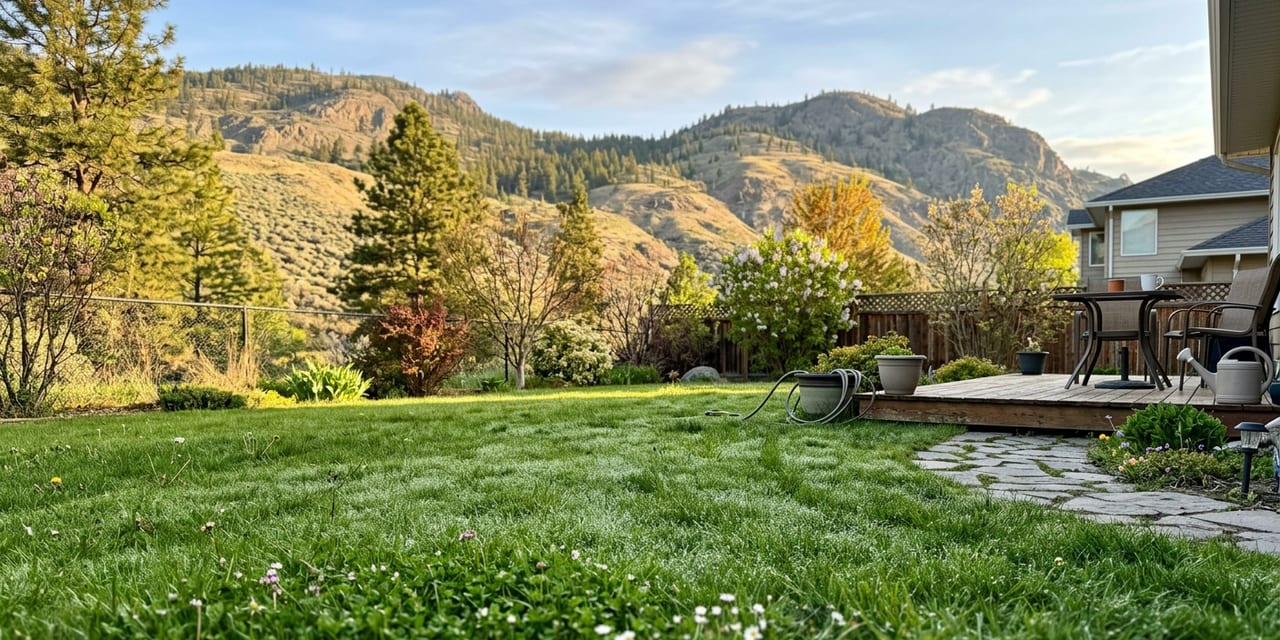
Okanagan Lawn Care Calendar: What to Do Every Month in Kelowna's Climate
Lawn care advice written for Vancouver or Toronto doesn't translate well to the Okanagan. Our summers are hotter and drier, our springs can surprise you with late frost well into April, and by July half the valley is either on Stage 2 water restrictions or debating whether their lawn is dormant or dead. This calendar is built on what actually works in Kelowna's Zone 6b climate, month by month.
March and April: Waking Your Okanagan Lawn Up
The urge to get outside in March is real, but patience pays off here. Kelowna's last frost typically lands in late April, and walking on frozen or soggy turf compacts the soil and tears up grass that hasn't hardened off yet. Wait until daytime temperatures are consistently above 10°C and the soil isn't waterlogged before you start doing anything.
When the timing is right, your first job is a light rake. Pull out the thatch and matted debris that built up over winter. You don't need to be aggressive about it, you're just clearing the surface so air and light can get in. If you have a gas mower, this is a good time to get it serviced (blades sharpened, oil changed) before the first cut.
Your lawn care in Kelowna irrigation system needs attention before you fire it up. Run through each zone and check for cracked heads or broken lines from the freeze. A system that runs all spring with a broken head is wasting water and creating wet spots that invite disease.
On fertilizer: don't rush it. Applying nitrogen to cold soil just encourages tender top growth that's vulnerable to frost and disease. Wait until May when soil temperature is genuinely warm. Applying early is one of the most common mistakes homeowners make in the Okanagan, and it does more harm than good.
Kelowna's last frost date is typically April 20-25, but it can run later in lower-lying areas around Ellison or the North End. Don't put away your frost cloth until May 1.
May and June: The Best Growing Months
May and early June are genuinely the best time to work on your lawn in the Okanagan. Soil temps are climbing, moisture is usually decent, and the heat hasn't kicked in yet. If you have bare patches, reseed or lay sod now. Sod laid in May has time to root deeply before summer stress hits, sod laid in July struggles badly in our heat.
For sod installation in Kelowna, May is the ideal window. New sod needs daily watering for the first two to three weeks while it knits into the soil, and May's moderate temperatures make that much easier to manage than July. If you're putting in new sod in late May, plan to be home or have irrigation set up, skipping a watering day in 30°C heat will kill fresh sod fast.
Mowing frequency picks up in May. Most Okanagan lawns need cutting once a week when actively growing. Keep your blade height at around 7.5 to 8cm (3 inches). Cutting too short stresses the grass and lets weeds establish. The "one-third rule" applies here: never remove more than one-third of the blade height in a single cut.
This is also the window for a first fertilizer application. A balanced slow-release fertilizer in mid-May feeds the lawn through the growing season without pushing excessive growth. Your lawn care service can advise on the right product for your specific grass type, most Kelowna lawns are Kentucky bluegrass or a bluegrass-fescue mix.

Aeration in spring (May) works well if your soil is compacted. Fall is generally better for most Okanagan lawns, but if your lawn is heavily trafficked, a spring aeration before the first fertilizer application helps both get in.
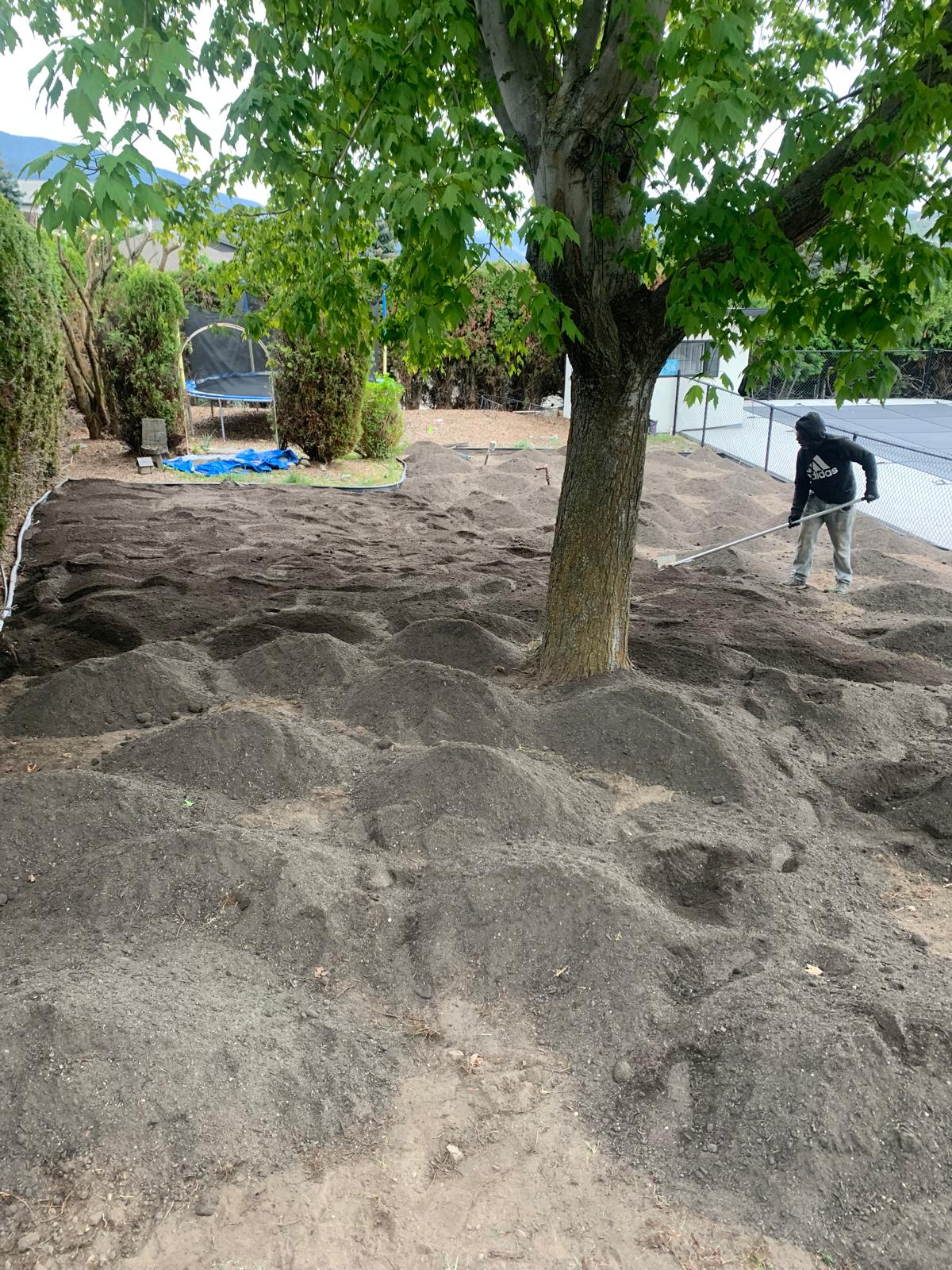 Before
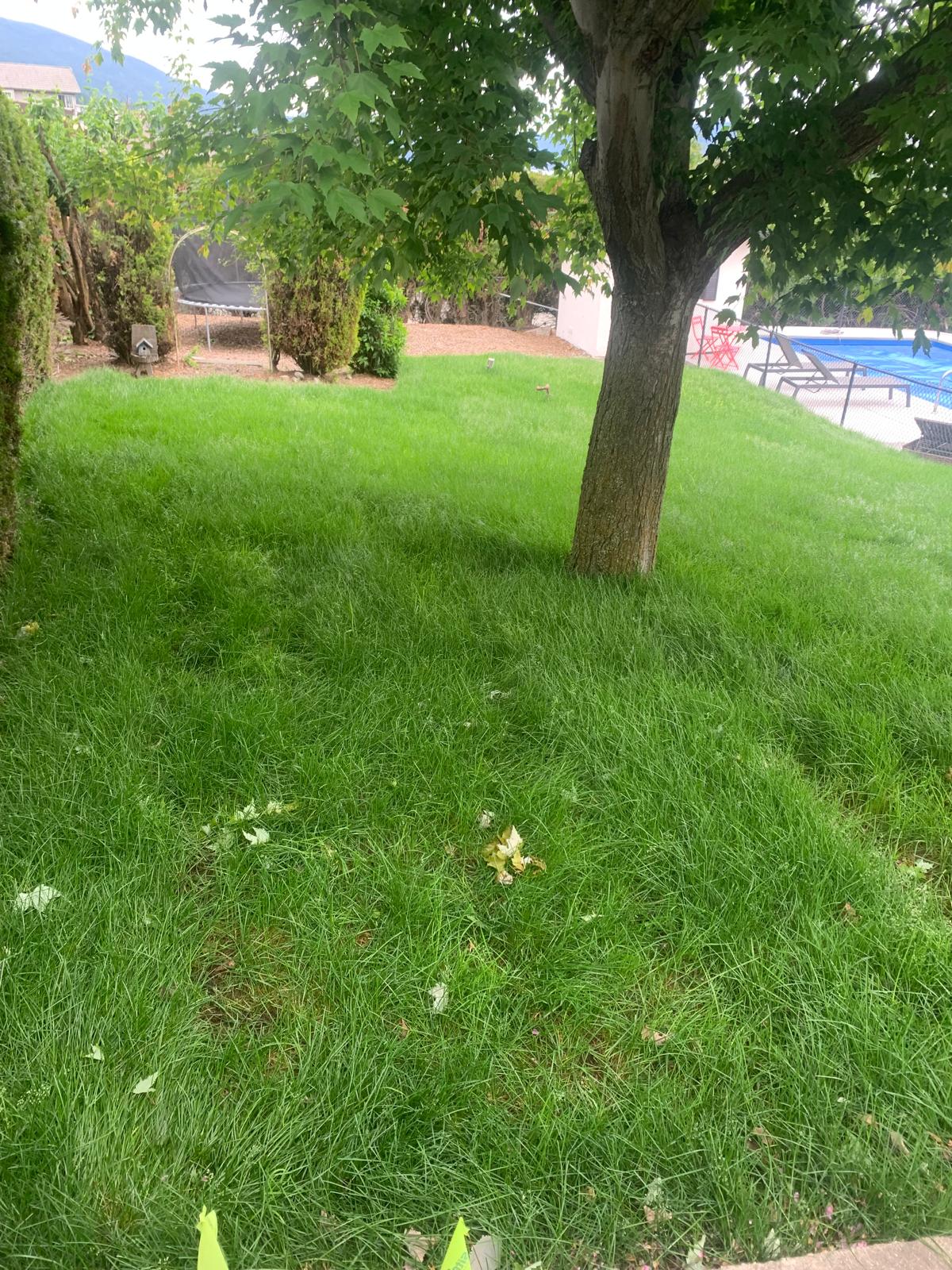 After
After
July and August: Survival Mode in the Okanagan Heat
Here's something nobody tells new Okanagan homeowners: a brown lawn in August is usually not a dead lawn. Grass goes dormant in heat and drought. It's a survival mechanism. Most cool-season grasses (bluegrass, fescue, ryegrass) will go dormant when temperatures are consistently above 32°C and water is scarce. They'll green back up when fall moisture arrives.
The problem is water restrictions. By July, Kelowna is typically on Stage 1 restrictions (odd/even day watering, no watering between 10am and 7pm). Stage 2 often kicks in by late July or August in drier years, which limits you to three days per week for even longer windows. This is just the reality of living in a semi-arid valley with a booming population.
If you choose to keep your lawn green through summer, water deeply and infrequently. Shallow daily watering trains roots to stay near the surface. A deep watering once or twice a week (within your restriction schedule) encourages roots to grow deeper, where they access moisture and stay cooler. Aim for about 2.5cm of water per session.
Raise your mowing height in July and August. At 9 to 10cm (3.5 to 4 inches), longer grass shades the soil, reduces water evaporation, and handles heat stress better. Avoid fertilizing in high summer, you'll push growth the lawn can't sustain without extra water.
For properties in Kelowna's hillside neighbourhoods, lawn maintenance in the Okanagan in summer often means working within restrictions while keeping the basics going. Sometimes the smart move is to let the lawn go dormant and invest energy in your garden beds instead.
Watering outside your restriction schedule in Kelowna can result in a fine. Check the City of Kelowna's current stage on their website before irrigating, restrictions can change quickly during a hot stretch.
September and October: The Most Important Month for Your Lawn
If you do one thing right on your lawn all year, do it in September. Fall is when cool-season grasses actively store energy in their roots for winter survival and spring recovery. The work you put in now shows up as a thicker, greener lawn in May.
Aeration is the first priority. Hollow-core aeration pulls small plugs from the soil, reducing compaction and letting air, water, and nutrients reach the root zone. September is ideal timing because the lawn is actively growing again after summer heat and can recover quickly. Leave the plugs on the surface, they'll break down and feed the lawn.
Overseed bare or thin patches right after aerating. The open soil contact from aeration gives seed excellent germination rates. Use a seed mix suited for the Okanagan (ask at a local garden centre, not a big box store that stocks generic products). Water lightly every day until the new seed germinates, then back off.
Fall fertilizer is different from spring fertilizer. You want a high-potassium product (sometimes labelled "winterizer") that builds root strength and cold tolerance rather than top growth. Apply in mid-to-late September when temperatures are cooling.
For lawn care in Vernon and the northern part of the valley, the frost window arrives a bit earlier, so September aeration timing matters. Don't wait until October if you're north of Kelowna.
Keep mowing until the lawn stops actively growing, typically late October in the Kelowna area. Your final mow can come down slightly in height (to around 6.5cm) to reduce the chance of snow mold over winter. Clear leaves off the lawn before snowfall, a thick mat of wet leaves sitting on grass all winter invites disease.
September is also the right time for a yard cleanup before winter. Clearing debris, trimming perennials, and prepping garden beds in fall makes spring startup much easier.
November Through February: Let It Rest
Your lawn is dormant. You don't need to do much, and you shouldn't.
Avoid walking on frozen grass, the frozen blades are brittle and foot traffic causes damage you won't see until spring. If you have a dog and a specific patch that gets heavy traffic all winter, consider a layer of straw to protect it.
Don't apply any fertilizer in this window. The lawn can't use it, and it'll either wash away or create nutrient runoff. Same with lime or soil amendments, save those for spring.
Snow is generally fine on grass. Light snow actually insulates the soil from deep freezes. Heavy ice is more of a concern; if you have low-lying areas that pool and freeze solid, note those spots for spring drainage work.
Late February is a good time to start thinking ahead. Order your fertilizer, check your seed supply, get your irrigation system inspection booked before everyone else calls in March. In Kelowna, lawn care season starts faster than people expect once the weather turns.

When to Call a Pro vs. Handle It Yourself
Most lawn care tasks are genuinely DIY-able if you have the time and equipment. Weekly mowing, hand watering, raking leaves, these don't require a professional.
Where homeowners run into trouble is the seasonal stuff: getting aeration done at the right time and depth, diagnosing what's actually wrong with a stressed lawn (drought dormancy vs. disease vs. grub damage look similar), and getting the fertilizer timing and product selection right.
There's also the equipment factor. A quality hollow-core aerator is expensive to own and only used once or twice a year. Renting works, but rental equipment books up fast in September when everyone wants to aerate at the same time.
Professional lawn care services in Kelowna typically include regular mowing, seasonal fertilization programs, aeration, and overseeding. For many homeowners, having someone handle the seasonal programs while they manage the weekly mow themselves is a good middle ground.
If your lawn has gone through a rough summer and you're not sure what you're dealing with, a single consultation is worth it. Knowing whether your lawn needs overseeding, dethatching, or something more targeted saves you from spending money on the wrong treatment. Cool Runnings serves the full Okanagan from Kelowna to Vernon lawn care and everywhere in between. Get in touch and we'll take a look.
Cool Runnings covers the full Okanagan valley, Kelowna, West Kelowna, Lake Country, Vernon, Penticton, and the communities in between. One call covers a lot of ground.
How to Revive a Drought-Stressed Okanagan Lawn
If your lawn went brown and dormant over summer and you want to bring it back strong, here's the process that works in Kelowna's climate.
Common Questions
When should I fertilize my lawn in Kelowna BC? ▾
When should I aerate my lawn in the Okanagan? ▾
What mowing height should I use in summer in Kelowna? ▾
How do water restrictions affect my lawn care in Kelowna? ▾
How do I know if my lawn is dormant or actually dead? ▾
When is the best time to overseed in the Okanagan? ▾
When should I do the first mow of spring in Kelowna? ▾
Ramoy Brissett is the owner and lead landscaper at Cool Runnings, which he founded in 2017. With 9+ years of hands-on experience working in the Okanagan Valley's unique semi-arid climate, he personally oversees every job the company takes on. His expertise covers lawn care, sod installation, drought-tolerant planting, mulch and drainage, and full-yard renovations across Kelowna, West Kelowna, Vernon, Penticton, and Salmon Arm.
More about Ramoy →