
Vernon Planting & Landscaping Checklist: Spring Prep Guide for Okanagan Homeowners
Spring in Vernon arrives on its own schedule. Vernon runs cooler than Kelowna, especially in the BX and higher-elevation areas. Last frost typically falls in early May. Don't start warm-season work until mid-May in Vernon. That means the spring prep window between snowmelt and peak growing season is shorter than it feels, and getting the order of operations right avoids redoing work or missing the best planting and installation windows. This checklist is built for Vernon and the surrounding area, not generic advice written for Vancouver or Southern Ontario. The timing, the water restriction context, and the climate zone notes reflect [planting & landscaping conditions in Vernon](/services/planting-landscaping/vernon/) specifically. Work through this in order — some tasks create the conditions for others to work properly, and jumping ahead costs time. If you're managing a full property refresh and want professional help with any part of this, Cool Runnings serves Vernon and provides free estimates. Call or text (250) 307-9220.
Step 1: Assess Before You Act
The first job every spring is a proper walk of your property before you do anything else. This sounds obvious but most homeowners skip straight to raking or scheduling work without noting what actually needs attention.
Walk the full perimeter and document:
- **Existing plant condition**: Which plants didn't survive winter? Dieback, dead branches, and frost damage from the previous fall are most visible before new growth obscures them. - **Bed condition**: Are beds compacted, depleted, or overrun with weeds? Note which beds need amendment before any new planting. - **Sun and shade patterns**: Spring sun angles differ from summer. Walk your yard at midday to note which areas are full sun, partial shade, and full shade at this time of year. - **Irrigation coverage**: New planting requires consistent watering to establish. Know before you plant whether each location can be watered without dragging a hose across the yard.
In Vernon's Zone 6a climate, planting before the last frost risks losing new growth. Vernon runs cooler than Kelowna, especially in the BX and higher-elevation areas. Last frost typically falls in early May. Don't start warm-season work until mid-May in Vernon. Wait until after frost risk passes for any tender perennials, annuals, or new shrubs.
Greater Vernon Water manages the municipal system serving Vernon and Coldstream. Summer restrictions apply July through August in most years.
Step 2: Soil Preparation and Bed Readiness
Good planting outcomes in Vernon's hot, dry climate start with soil that holds moisture and provides the right nutrients. Spending time on soil prep before plants go in the ground is the highest-return task in this checklist.
**Test or assess soil type**: Most Okanagan soils are alkaline (pH 7.0-8.0) with low organic matter. Grab a handful of moist soil: sandy soil falls apart, clay soil holds its shape. Most Vernon residential soils are sandy to silty loam, draining quickly and needing organic amendment.
**Add compost**: Incorporate 2-3 inches of compost into existing beds before planting. This improves water retention, adds microbial life, and provides balanced nutrients. Use a garden fork or tiller to work it 20-25cm (8-10 inches) deep.
**Clear weeds completely**: Remove all weeds including roots before planting. Weeds left in the bed will outcompete new plants for the water that's scarce in Vernon's summer. A fresh start beats trying to manage weeds around new plants.
**Plan irrigation coverage before planting**: Know how each planting area will be watered before you buy plants. New plantings in Vernon need consistent moisture for their first full season. If an area can't be irrigated easily, choose plants accordingly — or plan the irrigation first.
Vernon soils tend to dry out quickly. Mulching around new plants with 3-4 inches of bark mulch immediately after planting reduces water demand significantly during the establishment period.
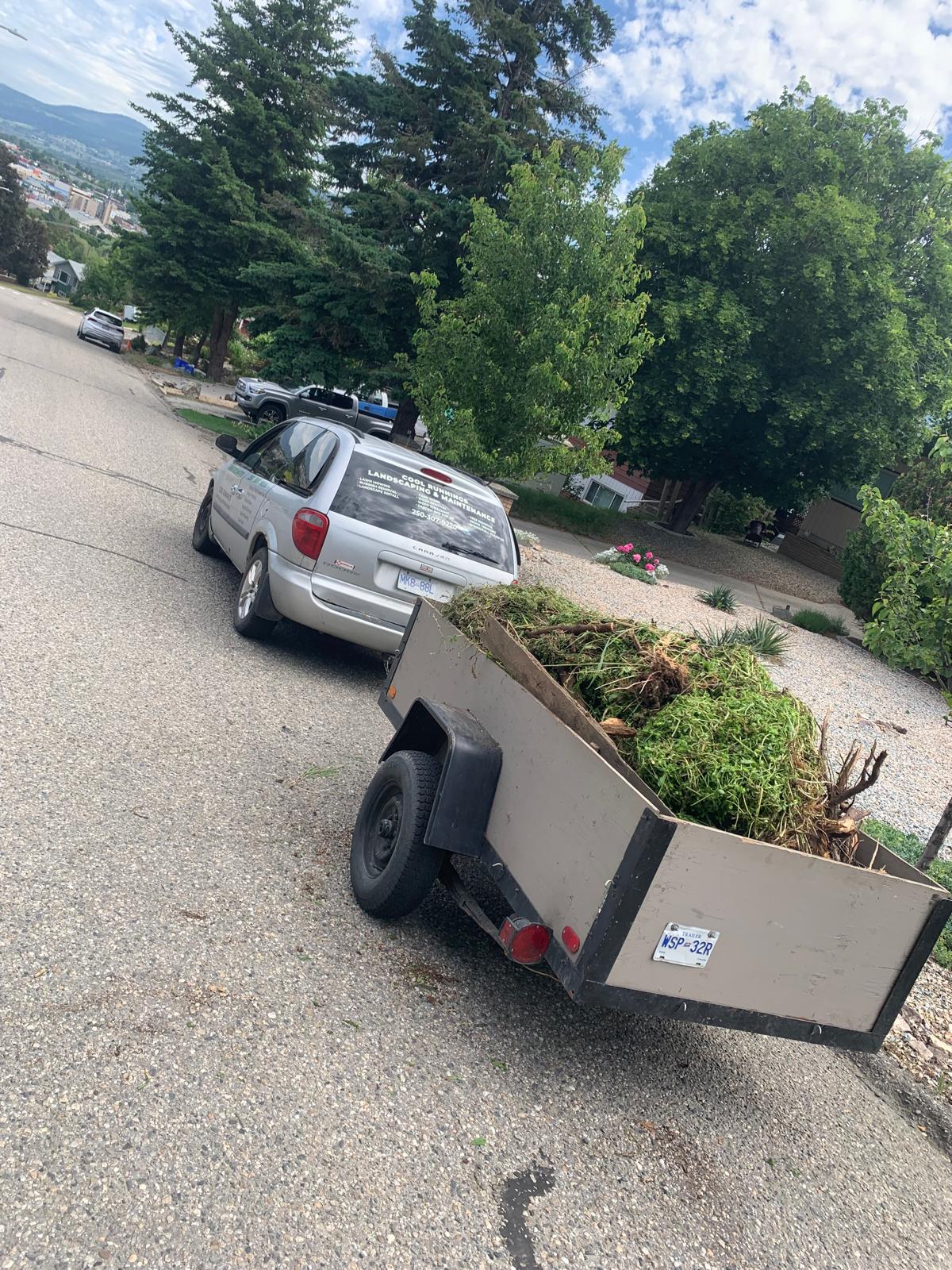 Before
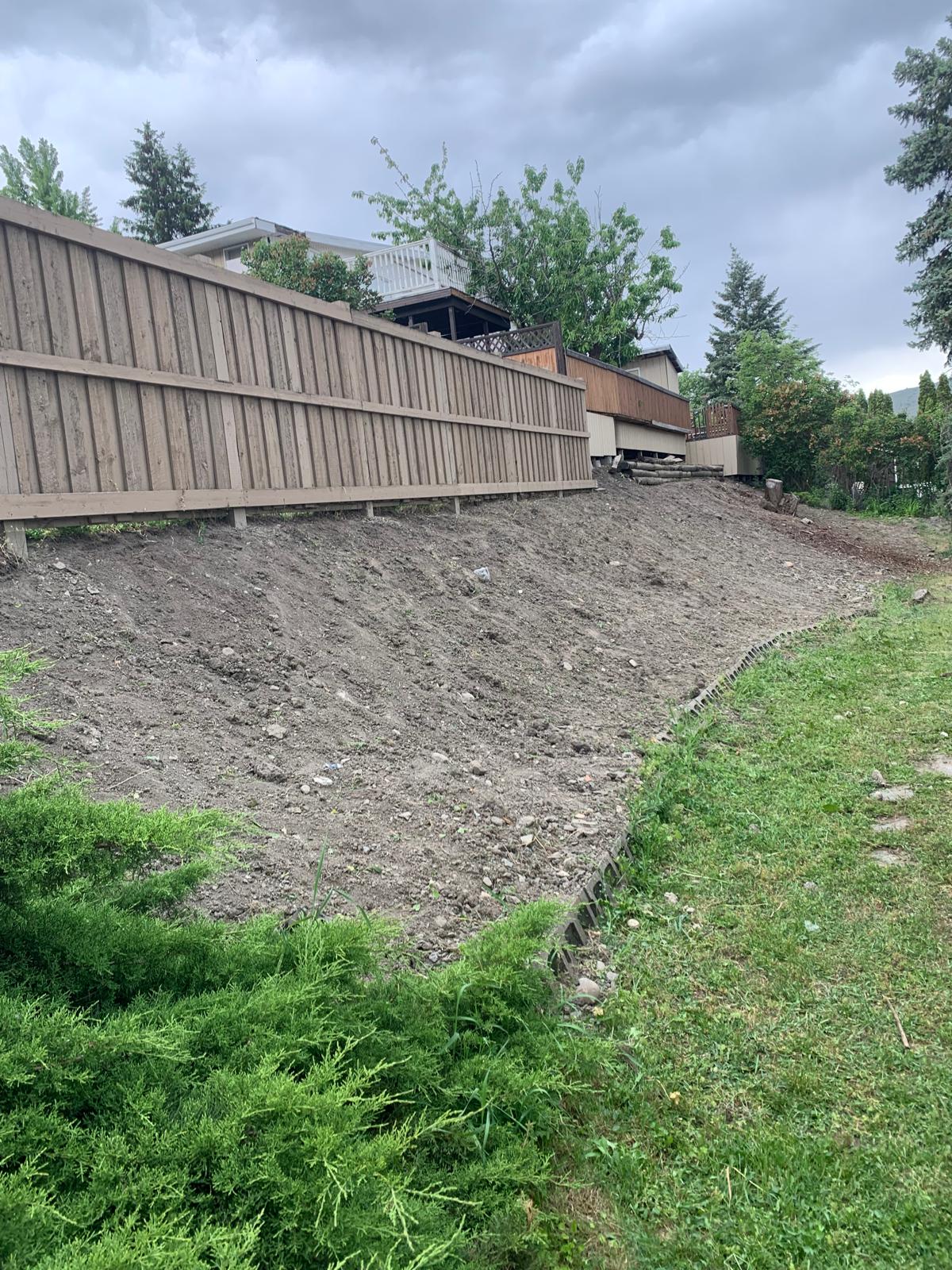 After
After
Step 3: Select Plants for the Okanagan Climate
Plant selection in Vernon is different from most of Canada. The semi-arid climate, alkaline soils, and water restrictions create a specific set of conditions that many plants from national garden chains aren't suited for.
**Focus on drought-tolerant species**: Plants that are rated for Zone 6a and can handle a summer with limited irrigation are the priority. After the first year, established plants can survive Vernon's summers with minimal supplemental watering.
**Native and near-native plants**: Okanagan native plants (Saskatoon, Red-osier dogwood, Mock orange, Rabbitbrush) are adapted to the climate and support local pollinators. Near-native adapted species (Russian sage, Catmint, Lavender) also perform extremely well in our conditions.
**Buy local**: A plant purchased from a Vernon-area nursery has been grown in similar conditions and is less likely to experience transplant shock than a plant shipped from the coast or a distribution centre in Ontario. Ask local nurseries what's been performing well for Okanagan clients.
**Spacing**: Plant at the mature size, not the current size. Crowded plantings create competition for water and nutrients, look overgrown within 3 years, and are expensive to thin out. Give plants the space they need at maturity even if the bed looks sparse initially.
**Planting timing in Vernon**: After the last frost (early May (around May 1-5)) for tender plants. Hardy trees and shrubs can go in earlier in spring or in fall when soil is still warm but air temperatures have cooled.
Spring planting in Vernon should happen before temperatures consistently exceed 25°C. Plants establishing in moderate temperatures need far less supplemental water than those planted in late June or July heat.
Step 4: Planting Day
The sequence on planting day matters as much as the preparation. Work efficiently once plants are out of their containers — roots dry out quickly in Vernon's dry air.
**Water plants before planting**: Thoroughly water all container plants 1-2 hours before planting. Dry root balls planted in dry soil establish poorly and are prone to transplant shock.
**Dig the right size hole**: Plant holes should be 2-3 times wider than the container but no deeper. The crown (where stem meets root) should sit at or slightly above soil level. Planting too deep is one of the most common causes of plant failure.
**Loosen root-bound roots**: If the root ball is tightly circled or pot-bound, loosen the roots by hand or score the sides with a knife before planting. Circling roots that aren't disrupted will continue to circle and eventually girdle the plant.
**Backfill and firm**: Fill the hole with the native soil mixed with the compost you amended in Step 2. Firm the soil gently but thoroughly to remove air pockets. Don't add fertilizer directly into the planting hole — it can burn fresh roots.
**Water in deeply**: Each plant gets a thorough watering at planting — enough to saturate the root ball and surrounding soil. Then apply mulch immediately.
Water new plantings with a slow, deep soak rather than a light spray. A 5-minute drip from a running hose at the base of each plant penetrates deeper than 30 seconds of sprinkler coverage. Deep roots survive Vernon's dry summers; shallow roots don't.
Step 5: First-Season Care
The first growing season is the most demanding for new plantings in Vernon. Plants that make it through their first dry summer in the Okanagan are typically self-sufficient after that.
**Water through the first summer**: Even drought-tolerant plants need supplemental water during establishment. Plan to water new plantings deeply 1-2 times per week through June, July, and August. This is the critical period.
**Watch for transplant stress**: Wilting in the afternoon is normal in Vernon's summer heat even in well-watered plants. Wilting in the morning is a sign of water stress. If plants are wilting before 10am, increase watering frequency.
**Hold off on fertilizer**: Don't fertilize newly planted shrubs or trees in the first season. New roots are sensitive and high-nitrogen fertilizers push soft growth that's vulnerable to heat stress. Let plants establish first.
**Stake trees properly if needed**: Trees over 1.5m (5 feet) in Vernon's spring winds may need staking. Use soft ties and two stakes; the tree should be able to flex slightly in the wind (this promotes trunk development). Remove stakes after one season.
**Monitor for pests and disease**: First-season plants are more vulnerable to aphids, spider mites, and powdery mildew than established plants. Inspect weekly through June-August.
The single best thing you can do for new plantings in Vernon is apply mulch immediately after planting and keep it topped up through the summer. A 4-inch mulch ring extending to the drip line of each plant reduces water needs by 30-50% and keeps roots cooler during heat events.
How to Prioritize Your Vernon Planting & Landscaping Tasks This Spring
When everything needs doing at once, work through these tasks in order. Each step sets up the next one.
Common Questions
When should I start planting & landscaping in Vernon in spring? ▾
Does Cool Runnings offer planting & landscaping services in Vernon? ▾
What are the Greater Vernon Water watering restrictions in Vernon? ▾
What's the most important planting & landscaping task to do in Vernon each spring? ▾
Can I book planting & landscaping services in Vernon year-round? ▾
Ramoy Brissett is the owner and lead landscaper at Cool Runnings, which he founded in 2017. With 9+ years of hands-on experience working in the Okanagan Valley's unique semi-arid climate, he personally oversees every job the company takes on. His expertise covers lawn care, sod installation, drought-tolerant planting, mulch and drainage, and full-yard renovations across Kelowna, West Kelowna, Vernon, Penticton, and Salmon Arm.
More about Ramoy →