
West Kelowna Sod Installation Checklist: Spring Prep Guide for Okanagan Homeowners
Spring in West Kelowna arrives on its own schedule. West Kelowna shares similar frost timing with Kelowna, with last frost around April 20-25. South-facing slopes in Lakeview Heights can be 1-2 weeks earlier. That means the spring prep window between snowmelt and peak growing season is shorter than it feels, and getting the order of operations right avoids redoing work or missing the best planting and installation windows. This checklist is built for West Kelowna and the surrounding area, not generic advice written for Vancouver or Southern Ontario. The timing, the water restriction context, and the climate zone notes reflect [sod installation conditions in West Kelowna](/services/sod-installation/west-kelowna/) specifically. Work through this in order — some tasks create the conditions for others to work properly, and jumping ahead costs time. If you're managing a full property refresh and want professional help with any part of this, Cool Runnings serves West Kelowna and provides free estimates. Call or text (250) 307-9220.
Step 1: Assess Before You Act
The first job every spring is a proper walk of your property before you do anything else. This sounds obvious but most homeowners skip straight to raking or scheduling work without noting what actually needs attention.
Walk the full perimeter and document:
- **Soil grade and drainage**: Is the existing surface level? Does water run toward or away from the house? Any grade issues should be corrected before sod goes down. - **Existing lawn or ground cover**: Note what needs to be removed. Old lawn, weeds, or compacted bare soil all require different prep approaches. - **Irrigation coverage**: If you have an irrigation system, map the zones now. New sod needs daily watering for 2-3 weeks, so knowing your system covers the installation area before you call for a quote saves time. - **Access routes**: How will material get to the site? Sod pallets weigh 800-1,000 kg. Note any access limitations (narrow gates, soft ground, low overhead clearance) that affect delivery.
In West Kelowna, sod installation timing is critical. West Kelowna shares similar frost timing with Kelowna, with last frost around April 20-25. South-facing slopes in Lakeview Heights can be 1-2 weeks earlier. Laying sod before the soil is consistently warm (above 10°C) slows establishment significantly.
West Kelowna water restrictions align closely with Kelowna's Okanagan Water Smart schedule. Summer irrigation limits apply from July through August.
Step 2: Soil Prep
Sod installation success in West Kelowna's climate is primarily determined by what happens before the sod arrives. Poor prep is the leading cause of sod failure and the main difference between a lawn that knits in properly and one that dies in its first summer.
**Remove existing ground cover**: Kill or remove the existing lawn using a sod cutter rental, herbicide (applied 2 weeks prior), or manual removal. Any existing grass or weeds left under new sod will eventually push through.
**Grade the surface**: The finished grade should slope gently away from the house (minimum 2% grade, about 1 inch per 4 feet). Flat or negative-grade areas will pool water under sod. If grading is needed, do it now before topsoil is added.
**Add topsoil if needed**: New sod needs 10-15cm of good topsoil for deep root development. Many West Kelowna properties (particularly new builds) have compacted subsoil with minimal topsoil. Add organic topsoil and work it 5-8cm into the existing surface.
**Firm and level**: After topsoil, roll the surface with a lawn roller (available to rent) to remove air pockets and create a firm, level base. The sod should sit flush with adjacent surfaces like sidewalks, not proud of them — sod adds about 1.5-2 inches of height once laid.
**Pre-irrigate**: Water the prepared surface the day before sod delivery to ensure the soil is moist when roots make contact. Dry soil slows establishment.
In West Kelowna, soil temperature matters. Sod laid in cold soil (below 10°C) roots slowly and is vulnerable to cold snaps. Wait until late April (around April 20-25) risk has passed and soil is consistently above 10°C.
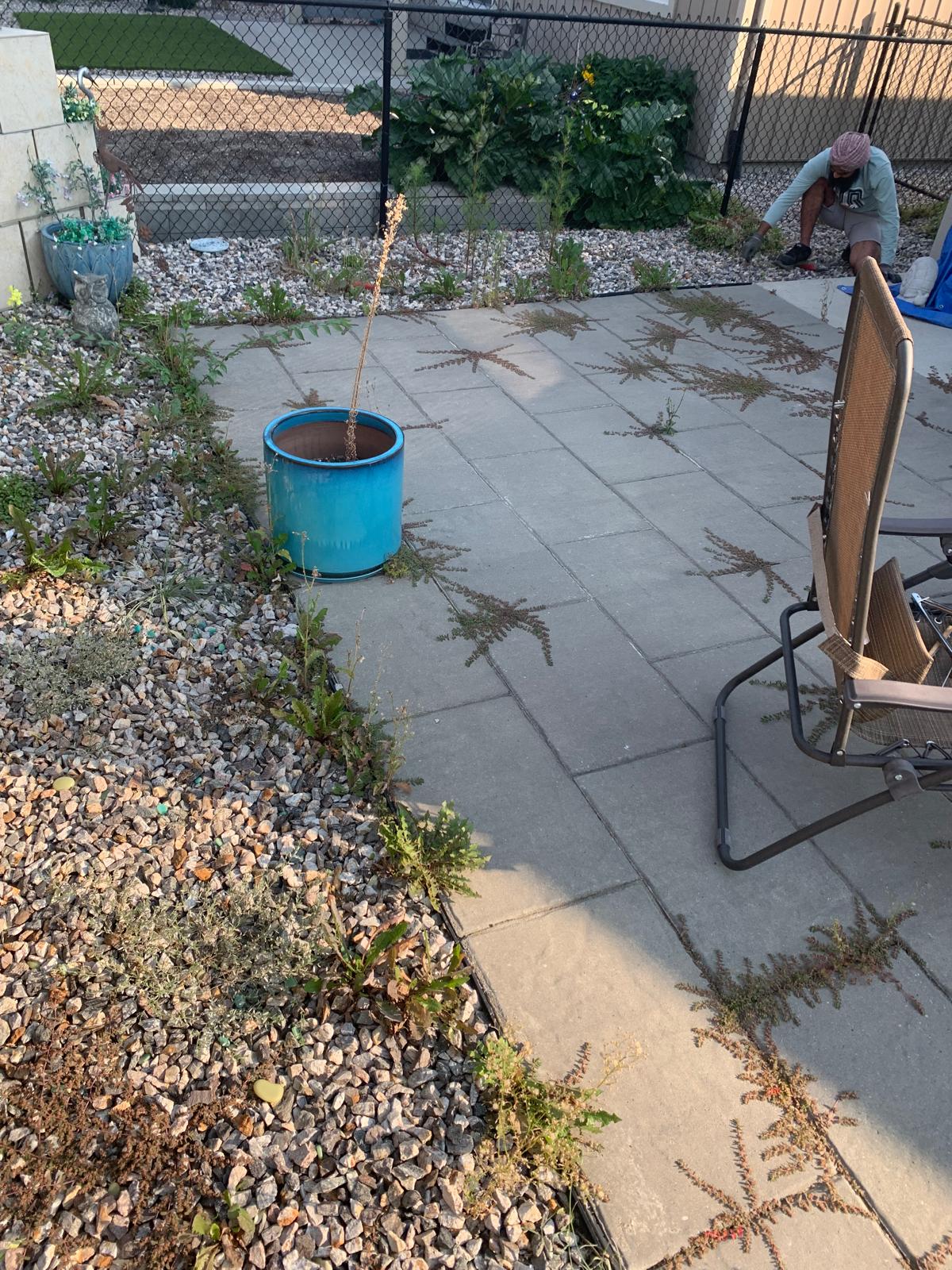 Before
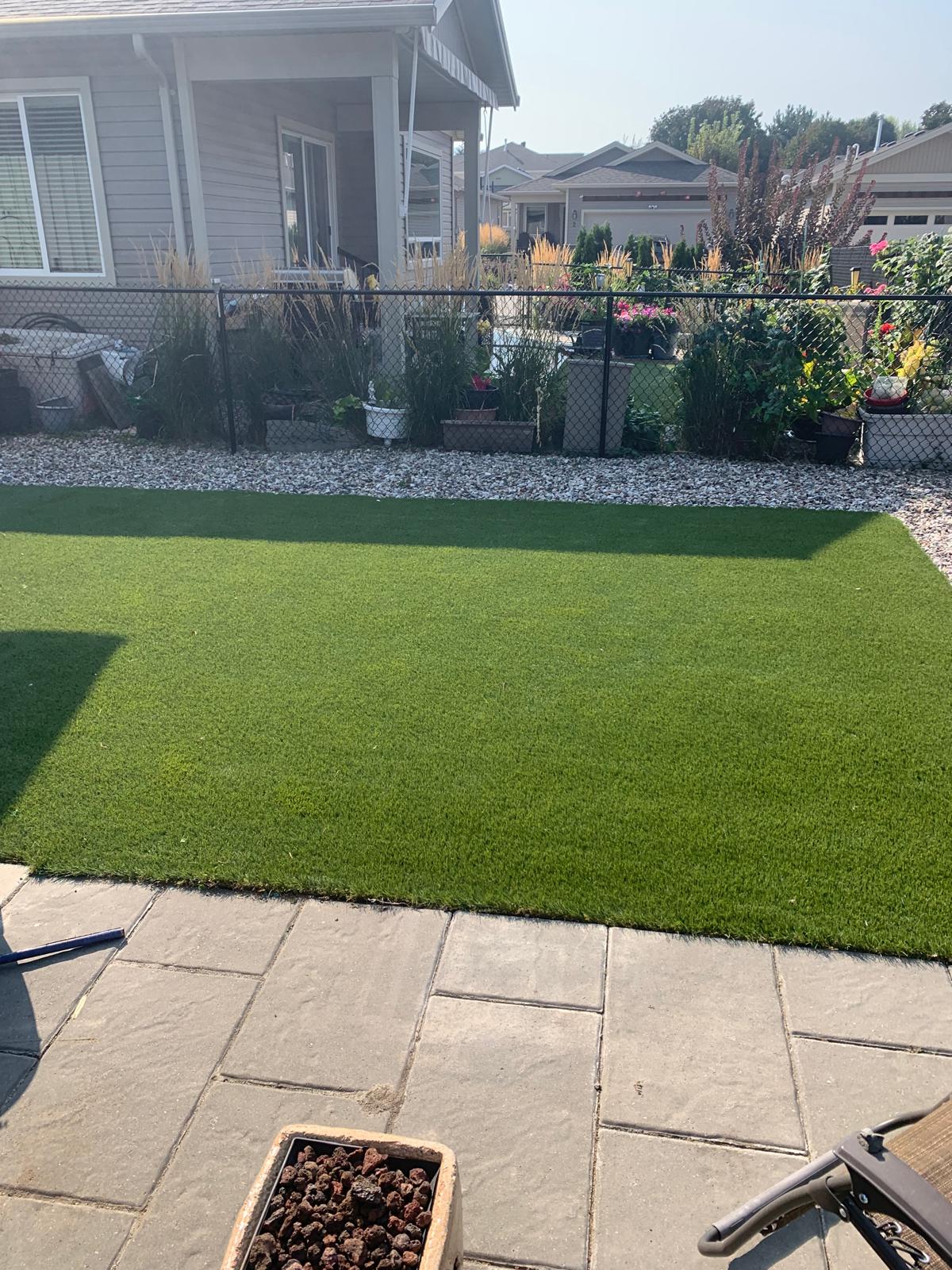 After
After
Step 3: Order Sod and Schedule Installation
Once site prep is done, you're ready to coordinate the actual installation. This step requires more planning than people expect.
**Choose your sod variety**: Standard Kentucky bluegrass works well for most West Kelowna properties. Fine fescue blends handle shade better. Drought-tolerant cultivars exist but cost more. Ask your supplier what performs best in the Okanagan climate — most carry product specific to interior BC conditions.
**Calculate quantity accurately**: Measure your installation area in square feet and add 10% for cuts and waste. Sod is typically sold by the pallet (covers approximately 500 square feet). Underordering means a second delivery charge; sod can't be held for more than 24 hours before it needs to be installed.
**Schedule delivery for installation day**: Sod cut from the farm must be installed and watered within 24 hours, ideally less. Don't accept delivery on a day you can't complete installation. Sod left rolled up for 2 days in West Kelowna's heat is dead sod.
**Lay on a mild day**: Avoid scheduling installation during the hottest days of summer in West Kelowna. Installation in May or early June means establishment in manageable temperatures. July installations require twice-daily watering for the first week.
**Stage your watering plan**: Before sod arrives, confirm your irrigation coverage, have a hose and sprinkler positioned if needed, and know your water restriction schedule. New sod needs daily watering for 2-3 weeks — this is non-negotiable.
West Kelowna water restrictions align closely with Kelowna's Okanagan Water Smart schedule. Summer irrigation limits apply from July through August. If you're installing sod in summer, plan your watering schedule around restriction windows before the sod goes down.
Step 4: Installation Day
On installation day, the goal is to get the sod laid, rolled, and watered before the sun gets high. Morning installations in West Kelowna's spring heat are ideal.
**Lay sod immediately**: Rolled sod begins heating up and deteriorating within hours. Don't accept delivery and then leave it sitting on the pallet while you finish prep. Have the ground ready before delivery arrives.
**Stagger joints**: Lay sod like brick courses — offset each row so the seams don't line up in straight lines. Straight seams allow drying along the gaps and look poor when established.
**Butt edges tightly**: Sod pieces should be pressed firmly together with no gaps. Gaps dry out, fail to knit, and become visible seams after establishment.
**Cut carefully around curves and obstacles**: Use a sharp knife or half-moon edger. Ragged cuts don't knit cleanly. Measure twice on irregular shapes.
**Roll the entire installation**: A filled lawn roller pressed over the newly laid sod improves root-to-soil contact. This step is skipped by some DIY installers and it visibly impacts establishment quality.
**Water immediately and thoroughly**: The first watering after installation should wet the sod and the top 5cm of soil beneath it. Check by lifting a corner after watering — the soil underneath should be visibly moist.
In West Kelowna's summer heat, new sod can begin dying within 4 hours if not watered. On hot days (above 28°C), sod needs water within 1-2 hours of being laid. If installing in summer, start early, work fast, and water each section as you go.
Step 5: First 30 Days of Care
The establishment period is where new sod is most vulnerable. What you do in the first 30 days determines whether the investment pays off.
**Days 1-7: Daily watering**: Water enough to keep the soil below the sod moist throughout the day. In West Kelowna's spring, this typically means 10-15 minutes per zone in the morning and a second cycle in early afternoon on hot days. Lift a corner daily to check soil moisture.
**Days 7-14: Watch for knitting**: By day 7-10, roots begin penetrating the soil. Tug gently on the sod — resistance means it's knitting. Once the sod resists a gentle pull, you can begin reducing watering frequency.
**Days 14-21: Reduce watering frequency**: Transition to once-daily deep watering as roots establish. Avoid walking on the sod during this period — foot traffic before the sod is fully rooted creates uneven surfaces and damaged areas.
**First mow**: Wait until the sod is firmly rooted (usually 3 weeks) before the first mow. The mower should not pull or lift corners as it passes. Set blade high for the first cut (8cm) and never remove more than one-third of the blade height.
**Days 21-30: Normal watering schedule**: Transition to your regular irrigation schedule. West Kelowna water restrictions align closely with Kelowna's Okanagan Water Smart schedule. Summer irrigation limits apply from July through August.
Don't let new sod dry out completely at any point in the first 3 weeks. A single day of severe drying in West Kelowna's summer heat can kill sod that was establishing perfectly. If you're traveling, arrange for someone to water in your absence.
How to Prioritize Your West Kelowna Sod Installation Tasks This Spring
When everything needs doing at once, work through these tasks in order. Each step sets up the next one.
Common Questions
When should I start sod installation in West Kelowna in spring? ▾
Does Cool Runnings offer sod installation services in West Kelowna? ▾
What are the Regional District of Central Okanagan watering restrictions in West Kelowna? ▾
What's the most important sod installation task to do in West Kelowna each spring? ▾
Can I book sod installation services in West Kelowna year-round? ▾
Ramoy Brissett is the owner and lead landscaper at Cool Runnings, which he founded in 2017. With 9+ years of hands-on experience working in the Okanagan Valley's unique semi-arid climate, he personally oversees every job the company takes on. His expertise covers lawn care, sod installation, drought-tolerant planting, mulch and drainage, and full-yard renovations across Kelowna, West Kelowna, Vernon, Penticton, and Salmon Arm.
More about Ramoy →