
Sod vs. Seed in Kelowna: Which One Actually Works in the Okanagan?
The sod vs. seed question comes up constantly for Kelowna homeowners doing a new lawn or repairing a dead one. The answer depends on your budget, your timeline, and the time of year you're working, but in the Okanagan the decision is usually pretty straightforward once you understand what grass seed is actually up against here. Kelowna sits in Zone 6b with a semi-arid climate. Summers regularly hit 35 to 40°C, and by late June we're typically on Stage 2 water restrictions. That combination is genuinely difficult for grass seed. Seed needs consistent moisture for 6 to 8 weeks to establish. In July and August, keeping bare soil damp enough for germination without running your sprinklers twice a day is a real challenge, and Stage 2 restrictions often limit you to specific watering days and times. The math doesn't work in seed's favour. Sod starts as established turf. You lay it, you water it daily for 2 to 3 weeks, and it roots into your soil. It's not indestructible in Okanagan heat, but it's far more forgiving than seed trying to germinate from scratch in 38°C temperatures. Cost is where seed wins clearly. Sod [installed by a professional in Kelowna](/services/sod-installation/kelowna/) runs $5.50 to $10 per square foot depending on grass type and site prep. Seed costs $0.50 to $2 per square foot in materials, though you still have labour, soil prep, and watering time on top of that. For a 500 square foot area, you're looking at $2,750 to $5,000 for installed sod versus $250 to $1,000 for seed materials plus your own labour. This guide breaks down both options honestly so you can make the right call for your yard, your schedule, and your budget.
Cost Comparison: What You're Actually Paying For
Sod installation in Kelowna typically runs $5.50 to $10 per square foot when you hire it out. That price includes the sod itself, delivery, soil prep (grading, rototilling, and topdressing if needed), installation, and initial watering instructions. On a 400 square foot lawn that's $2,200 to $4,000. On a 1,000 square foot lawn you're looking at $5,500 to $10,000.
Grass seed is dramatically cheaper on the material side. A quality Kentucky bluegrass or fescue seed mix for the Okanagan runs $0.50 to $2 per square foot in seed alone. But seed is not truly DIY-free. You still need soil prep (same rototilling and grading as sod), you need a starter fertilizer, you need straw mulch to hold moisture and protect seed from wind and birds, and you need someone to do that work. If you're hiring labour for soil prep and seeding, the gap between seed and sod narrows considerably.
The other cost of seed is time and water. For 6 to 8 weeks while seed establishes, you need daily moisture. In Kelowna summers that means irrigation or hand watering every day, often twice a day in peak heat. Your water bill reflects that, and your time does too. Sod's 2 to 3 week establishment window means less water consumed and less time monitoring bare soil.
For a straight material-cost project where you're doing all the labour yourself, seed wins on budget. For anything where you're hiring a crew or dealing with a tight timeline, sod is usually the smarter spend because failed seed means doing it all over again. See our sod installation pricing guide for current Kelowna rates.
Kelowna sod suppliers typically stock Kentucky bluegrass and bluegrass-fescue blends suited to our climate. Ask specifically for drought-tolerant varieties. Some suppliers carry tall fescue mixes that handle Okanagan summers better than pure bluegrass.
Time to Usable Lawn: Sod vs. Seed
One of the most underrated factors in this decision is how long you're locked out of your yard. With sod, the general guideline is to stay off it for 2 to 3 weeks while it roots. After that, you can use the lawn lightly. By 6 weeks you have a fully functional lawn. The sod is already grass when it arrives, it just needs to knit into your soil.
Seed operates on a completely different timeline. Germination takes 10 to 21 days depending on soil temperature, seed type, and moisture. Once germinated, that seedling grass needs another 4 to 6 weeks to establish before it can handle foot traffic. In total, you're looking at 6 to 8 weeks minimum before you can walk on it without damaging the new growth, and 3 to 4 months before it's fully thick and established.
For families with kids or dogs, the difference is significant. Keeping a dog off a freshly seeded lawn for 2 months is a real challenge. Keeping them off sod for 3 weeks is manageable.
There's also the failure risk with seed. If you get a week of intense heat during germination, or miss a watering day, or birds eat a patch, you get thin or bare spots. Those spots need reseeding and another full cycle. It's not uncommon for a seeded lawn to need one or two rounds of overseeding before it looks right. With sod, what you see when it's installed is pretty much what you get, assuming it gets adequate water.
If you're seeding in fall (September), you get the best of both worlds: cool temperatures help germination, and winter dormancy gives roots time to establish before summer heat. Fall seeding is the only time seed is genuinely competitive with sod in the Okanagan.
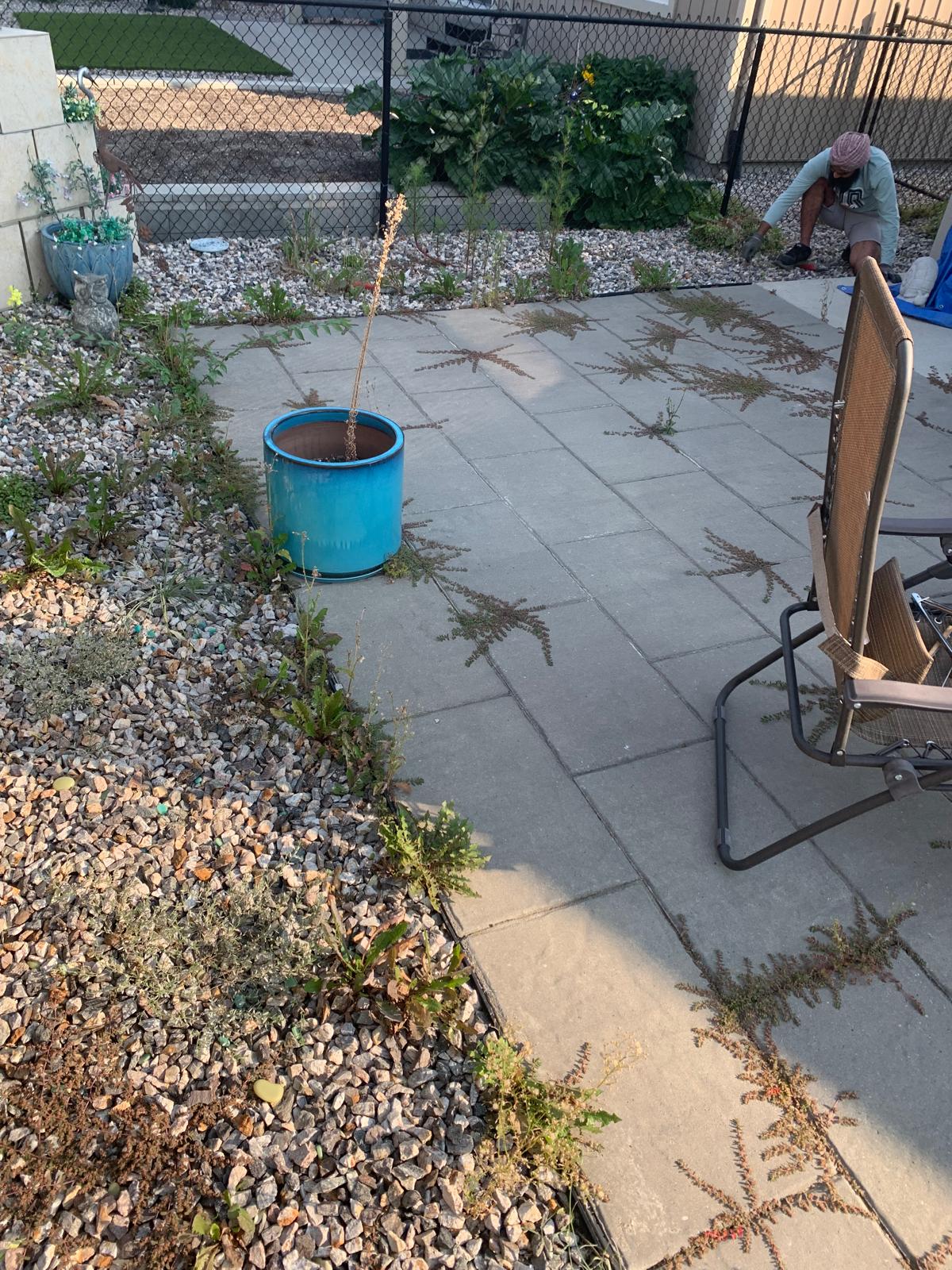 Before
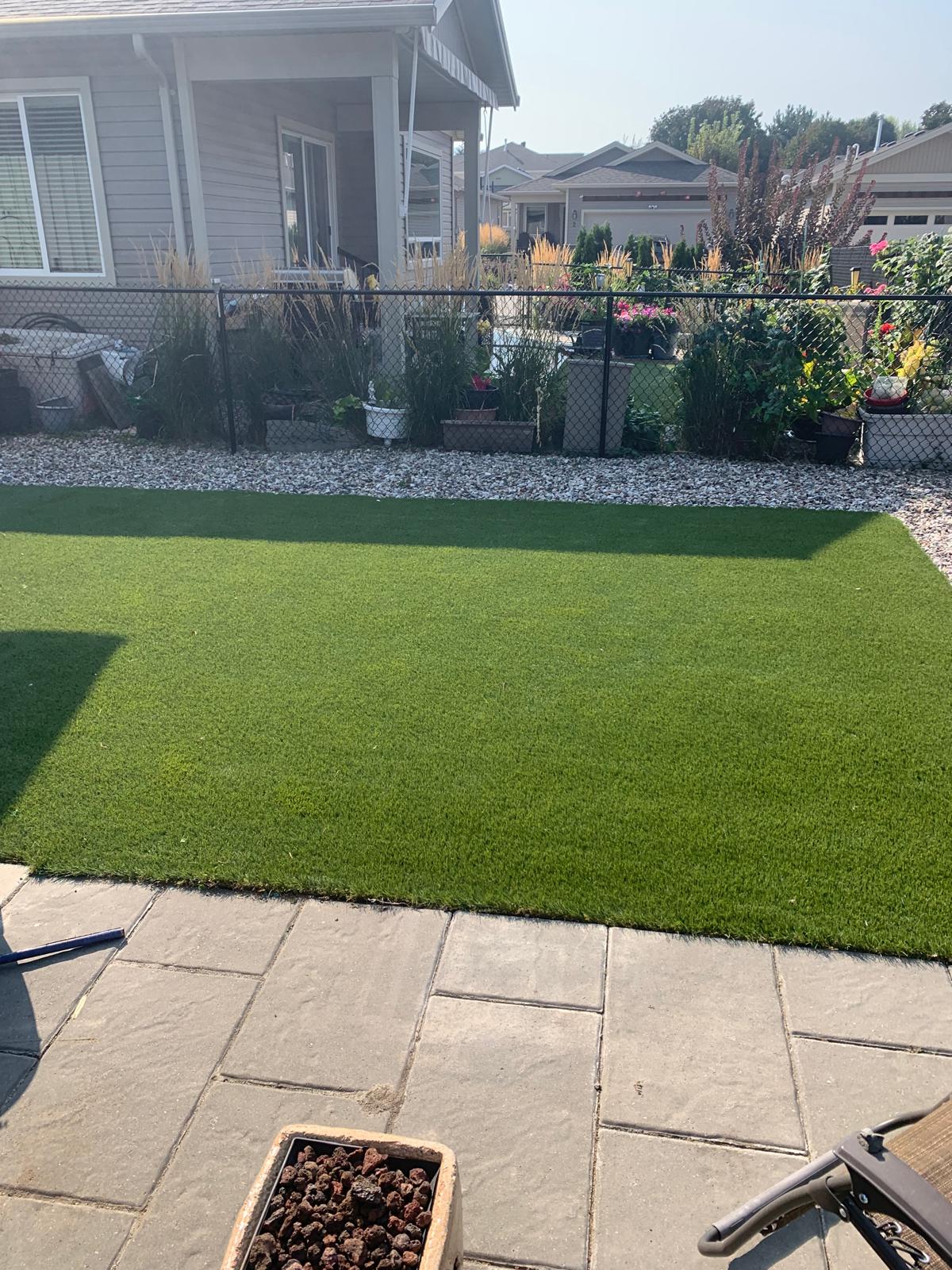 After
After
Summer Installation Risk in Okanagan Heat
Installing either sod or seed in July and August in Kelowna carries real risk, but the risks are different in scale. Sod installed in mid-summer can be done successfully with daily watering and the right variety. It will stress in 38°C heat, the edges may brown, and it needs more water than a spring installation, but it generally survives if it gets consistent moisture. The roots are already developed, which is the critical advantage.
Seed installed in July has a very low success rate in the Okanagan without irrigation and a lot of attention. The soil surface dries out within hours in summer heat. Germinating seeds need the top inch of soil to stay consistently moist, and in Kelowna's heat that means watering two to three times a day. On Stage 2 water restrictions, which the City of Kelowna typically moves to by mid-June or early July, you're limited to specific days and times. You cannot water a new seeded lawn twice a day on alternate-day restrictions.
The City of Kelowna and the Regional District allow exceptions for newly installed sod, but newly seeded areas are often not given the same exception. This is a concrete, practical constraint that most seed proponents don't account for. If you're planning a summer lawn project and you want it to succeed, sod is the practical choice in this region.
Spring installation (May to early June) is where seed becomes genuinely viable. Soil temperatures are warm enough to support germination, heat hasn't peaked, and restrictions haven't kicked in. If you're planning a seeded lawn, target May.
Stage 2 water restrictions in Kelowna typically limit outdoor watering to 2 days per week at specific times. This is not enough water for newly seeded lawns to establish in summer. Check the City of Kelowna's current restriction level before starting a seed project.
Watering Requirements Compared
New sod in Kelowna needs daily watering for the first 2 weeks, aiming to keep the top 2 inches of soil moist. A typical residential sod installation needs roughly 1 inch of water per week during establishment, delivered in shorter daily sessions rather than one deep weekly soak. After the first 2 weeks you can begin transitioning to deeper, less frequent watering to encourage deeper root development.
Once established (6 weeks post-install), sod in the Okanagan needs about 1 inch of water per week in summer. That's roughly 2 to 3 watering sessions per week in July and August. During Stage 2 restrictions, many homeowners find their lawn goes partially dormant, which is normal and the grass recovers when watering resumes.
Seed needs more frequent moisture during the germination and establishment phase, but less total volume per session. You're watering lightly 2 to 3 times a day to keep the surface moist without washing seed away. This light, frequent schedule is actually harder to manage with most residential irrigation systems, which are designed for deep, infrequent cycles. You may need to hand water sections or adjust your timer daily.
Once a seeded lawn is fully established (3 to 4 months in), its water requirements are similar to sod. The difference is entirely in the 6 to 8 week establishment window, which is the critical period. In the Okanagan that window is the determining factor in whether your seeded lawn succeeds.
GEID (Glenmore-Ellison Improvement District) and the City of Kelowna have different restriction schedules. If you're outside city limits, check your specific district's rules before planning a lawn installation project.
When Seed Makes Sense
Seed is not always the wrong choice. There are specific situations where it's the better option, and being clear about those helps you make the right call.
Overseeding an existing thin lawn is the clearest win for seed. You're not establishing from bare soil, you're thickening up an existing lawn. Broadcast seed over aerated turf in early September and let the fall rains do the work. This is standard maintenance and seed is perfect for it.
Large acreage projects where sod would be cost-prohibitive also make sense for seed. If you're seeding a 5,000 square foot rural property in spring with a proper irrigation system, seed can work. The economics flip dramatically at scale because installed sod on a large area is a significant expense.
Sloped areas with erosion concerns can sometimes be better served by a seed and erosion mat combination than sod. Sod on steep slopes can slide if not pegged properly, and the cost of pegging and maintenance adds up.
Finally, if you have a very specific grass variety requirement for shade or low-water use that isn't available in sod form locally, seed is your only option. Some of the better drought-tolerant fescue blends are only available as seed in the Okanagan market.
For standard residential lawn installations in Kelowna between May and September, sod remains the more reliable and ultimately more cost-effective option when you factor in the risk of seed failure and the time cost of managing it through the summer. Read more about the lawn care services we offer to keep your lawn healthy once it's established.
If you're overseeding existing lawn in fall, rake out thatch first and aerate before seeding. Seed needs soil contact to germinate. Dropping seed onto thick thatch gives you poor germination and disappointing results.
Which Option Is Right for Your Okanagan Yard?
Here's the direct summary. Choose sod if you're installing a new lawn any time from May through September, if you have kids or pets who need yard access within a few weeks, if you're in an area subject to Kelowna's summer water restrictions, or if this is your primary outdoor living area and you want reliable results.
Choose seed if you're overseeding an existing lawn in fall, if you're working with a large area where sod costs are prohibitive, if you're willing to install in May and manage daily watering for 6 to 8 weeks, or if you need a specific grass variety not available in sod form.
The middle-ground approach that works well for some properties: sod the high-use areas (front yard, main backyard) and seed lower-traffic side yards or slopes in fall. This balances cost and reliability.
If you're unsure which direction to go, contact Cool Runnings for a site visit. Seeing the yard, the sun exposure, the soil type, and understanding your timeline and budget leads to a much better recommendation than any general guide can give. Call Ramoy at (250) 307-9220.
In the South Okanagan (Penticton, Summerland, Oliver), the climate is even drier and hotter than Kelowna. If you're in Zone 6b-7a territory down south, the argument for sod over summer seed installation is even stronger.
How to Choose Between Sod and Seed for Your Okanagan Yard
A practical decision framework for Kelowna and Okanagan homeowners picking between sod installation and grass seeding.
Common Questions
Can I seed a lawn in Kelowna in summer? ▾
How much does sod installation cost in Kelowna? ▾
What type of grass seed works best in Kelowna? ▾
Does Kelowna have water restrictions for new sod? ▾
How long does new sod take to root in Kelowna? ▾
Ramoy Brissett is the owner and lead landscaper at Cool Runnings, which he founded in 2017. With 9+ years of hands-on experience working in the Okanagan Valley's unique semi-arid climate, he personally oversees every job the company takes on. His expertise covers lawn care, sod installation, drought-tolerant planting, mulch and drainage, and full-yard renovations across Kelowna, West Kelowna, Vernon, Penticton, and Salmon Arm.
More about Ramoy →