
Vernon Yard Maintenance Checklist: Spring Prep Guide for Okanagan Homeowners
Spring in Vernon arrives on its own schedule. Vernon runs cooler than Kelowna, especially in the BX and higher-elevation areas. Last frost typically falls in early May. Don't start warm-season work until mid-May in Vernon. That means the spring prep window between snowmelt and peak growing season is shorter than it feels, and getting the order of operations right avoids redoing work or missing the best planting and installation windows. This checklist is built for Vernon and the surrounding area, not generic advice written for Vancouver or Southern Ontario. The timing, the water restriction context, and the climate zone notes reflect [yard maintenance conditions in Vernon](/services/yard-maintenance/vernon/) specifically. Work through this in order — some tasks create the conditions for others to work properly, and jumping ahead costs time. If you're managing a full property refresh and want professional help with any part of this, Cool Runnings serves Vernon and provides free estimates. Call or text (250) 307-9220.
Step 1: Assess Before You Act
The first job every spring is a proper walk of your property before you do anything else. This sounds obvious but most homeowners skip straight to raking or scheduling work without noting what actually needs attention.
Walk the full perimeter and document:
- **Winter debris**: Branches, matted leaves, and debris from winter storms need to be cleared before anything else. Note the volume — this affects how much time the cleanup will take. - **Damaged plants**: Identify anything that suffered frost damage, wind damage, or snow load damage over winter. Prune back damaged growth now before new growth makes it harder to see. - **Edge deterioration**: Winter frost heave and spring moisture often push lawn edges into garden beds. Note where edges need re-cutting. - **Soft or saturated areas**: Vernon soils in spring can be saturated from snowmelt. Walking heavily on saturated turf compacts it. Note any boggy areas and stay off them until they've dried.
The right timing for spring cleanup in Vernon is after the frost risk has dropped but before the grass starts actively growing. Vernon runs cooler than Kelowna, especially in the BX and higher-elevation areas. Last frost typically falls in early May. Don't start warm-season work until mid-May in Vernon.
Greater Vernon Water manages the municipal system serving Vernon and Coldstream. Summer restrictions apply July through August in most years.
Step 2: Clear Winter Debris
The first physical task of spring cleanup in Vernon is clearing everything that accumulated over winter. Work top-to-bottom and perimeter-to-center.
**Branches and blow-down**: Walk the perimeter first, clearing any fallen branches or wind damage. Stack these separately from organic debris — branches need different disposal or chipping than leaves and clippings.
**Matted leaves and debris from garden beds**: Use a leaf rake (not a metal tine rake) to clear beds. The goal is to remove debris without disturbing the soil or newly emerging bulbs. Work gently — crocus and early bulbs are pushing through by mid-April in Vernon.
**Lawn surface debris**: Rake the lawn surface to remove matted leaves, dead grass, and any clumped material. This is not dethatching — it's surface clearing. Don't rake aggressively on frozen or soft soil.
**Cleanup before fertilizer or seed**: Any fertilizer or overseeding work should come after the surface is cleared. Applying seed or fertilizer over matted debris reduces effectiveness significantly.
**Disposal plan**: Know where the material is going before you start. A truck or trailer makes one-trip disposal possible. Without a vehicle, you may need multiple bags and a scheduled municipal green waste collection.
Don't rush debris removal in Vernon. Wait until the soil has firmed up after snowmelt — typically early to mid-April in a normal year. Working on saturated soil leaves ruts and compaction that take the rest of the season to recover.
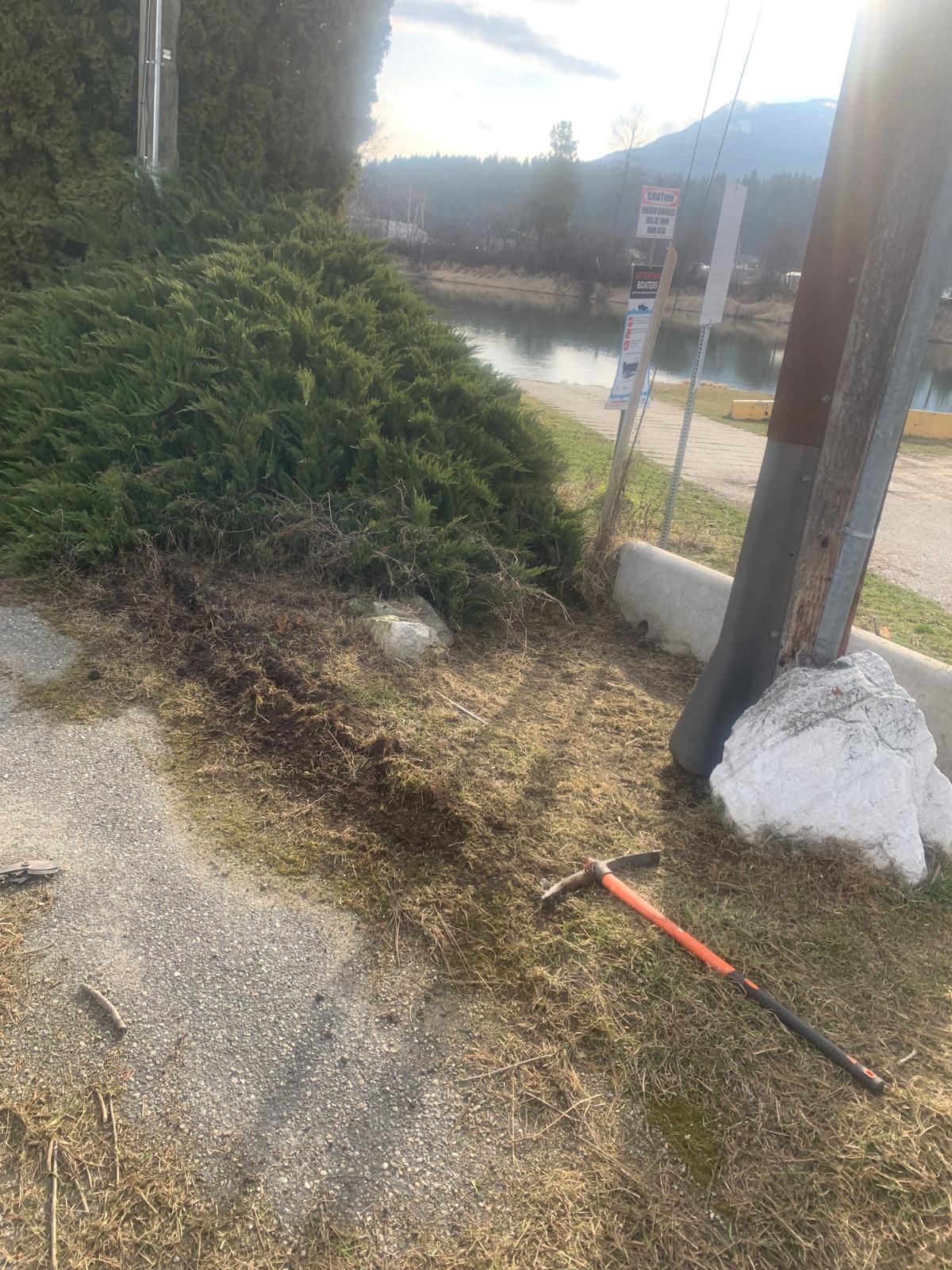 Before
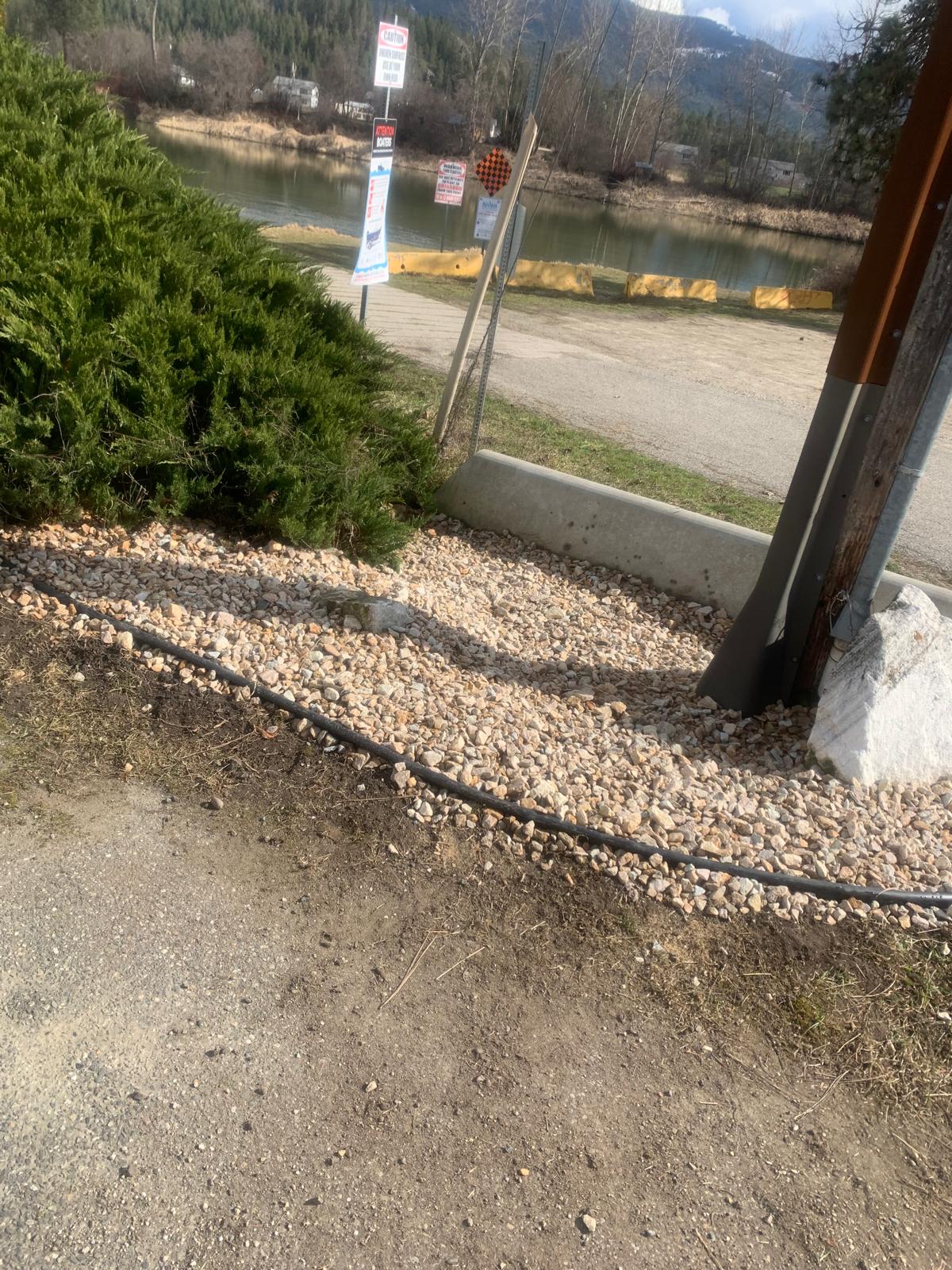 After
After
Step 3: Pruning and Edge Cleanup
After debris is cleared, the next task is pruning and edge work. Getting this right in spring sets the property up for the whole season.
**Perennial cutback**: Cut back dead perennial growth from last year to 2-3 inches above the crown. You'll see new growth emerging — leave it. The goal is to remove dead material without cutting into the new growth.
**Shrub and hedge pruning**: Wait until after last frost (early May (around May 1-5)) for any significant pruning in Vernon. Light dead-wood removal can happen earlier. Aggressive pruning before frost risk passes can stimulate new growth that gets damaged by late cold snaps.
**Cedar hedges**: In Vernon, cedar hedge trimming is best done in late April after the last heavy frost risk. Avoid cutting into old wood (brown interior growth) — cedar doesn't regenerate from bare wood. Trim only the green growth.
**Lawn edges**: Re-cut bed edges with a half-moon edger or powered stick edger before the lawn greens up fully. Frost heave through winter pushes edges out; spring is the time to reestablish them. A clean edge takes 20 minutes to cut and improves curb appeal dramatically.
**Irrigation system startup**: In Vernon, irrigation systems should be started up once frost risk has passed. Run through each zone, check for broken heads or lines damaged by ground heave, and confirm coverage before the lawn needs consistent watering in May.
Greater Vernon Water manages the municipal system serving Vernon and Coldstream. Summer restrictions apply July through August in most years. Schedule your irrigation system startup and first test run before Stage 1 restrictions take effect, so you know your system is working correctly when you need it.
Step 4: Fertilize and Feed Your Beds
After debris is cleared and pruning is done, spring is the right time to replenish nutrients that leached out over winter. This is separate from lawn fertilizer — this covers garden beds, trees, and shrubs.
**Compost top-dress for beds**: A 1-inch layer of finished compost worked lightly into the top of garden beds provides slow-release nutrition and improves soil structure. Apply after cleanup but before mulching.
**Shrub and tree feeding**: Established shrubs and trees in Vernon benefit from a spring feeding with a balanced granular fertilizer. Apply according to package rate — more is not better and high-nitrogen products push excessive soft growth that aphids favor.
**Lawn fertilizer timing**: In Vernon, wait until mid-May to apply the first lawn fertilizer. Soil temperature should be above 10°C before applying. This is later than most product labels suggest — they're written for milder climates.
**What not to do**: Don't apply fertilizer to frozen, waterlogged, or recently aerated soil without giving it a few days to settle. Don't apply in forecasted rain — fertilizer washes through quickly in sandy Okanagan soils.
A soil test from a local agricultural lab costs $20-30 and tells you exactly what your Vernon soil is missing before you buy products. Guessing at deficiencies often means over-applying one nutrient while the real problem goes unaddressed.
Step 5: Set Your Fall Cleanup Timeline Now
The most common mistake in yard maintenance is treating fall cleanup as a reaction to the weather rather than a planned event. By the time the first hard frost hits Vernon in mid-October, the best contractors are already booked for the season.
**What fall cleanup covers**: Leaf removal, perennial cutback, final mowing, cedar hedge trim, irrigation system blowout, and putting the property to bed for winter. Done properly, it takes one full working day for an average Vernon property.
**When to schedule it**: The ideal timing in Vernon is late September to mid-October, after first light frost but before hard freeze. You want leaves off the lawn before snow, and pruning done before plants go fully dormant.
**Irrigation blowout**: A compressed-air blowout of the irrigation system is required before the first hard freeze to prevent cracked lines and damaged heads. This is one of the most commonly forgotten fall tasks and one of the most expensive to overlook.
**Book in September**: Call your landscaper in September for fall cleanup. October booking is possible but availability is limited. November is too late for most fall prep work in Vernon.
Cool Runnings handles full-season yard maintenance for Vernon properties. Spring and fall cleanup, plus anything in between. Contact us to discuss a maintenance schedule.
First frost in Vernon typically arrives in early October. Irrigation systems should be blown out before ground freeze, which typically means before late October for most Vernon properties.
How to Prioritize Your Vernon Yard Maintenance Tasks This Spring
When everything needs doing at once, work through these tasks in order. Each step sets up the next one.
Common Questions
When should I start yard maintenance in Vernon in spring? ▾
Does Cool Runnings offer yard maintenance services in Vernon? ▾
What are the Greater Vernon Water watering restrictions in Vernon? ▾
What's the most important yard maintenance task to do in Vernon each spring? ▾
Can I book yard maintenance services in Vernon year-round? ▾
Ramoy Brissett is the owner and lead landscaper at Cool Runnings, which he founded in 2017. With 9+ years of hands-on experience working in the Okanagan Valley's unique semi-arid climate, he personally oversees every job the company takes on. His expertise covers lawn care, sod installation, drought-tolerant planting, mulch and drainage, and full-yard renovations across Kelowna, West Kelowna, Vernon, Penticton, and Salmon Arm.
More about Ramoy →